For manufacturers investing in plastic extrusion, purchasing equipment is far from the full picture of the production journey. Long-term profitability depends on how effectively a factory manages daily operating costs, including raw materials, energy consumption, labor, maintenance, and production efficiency.
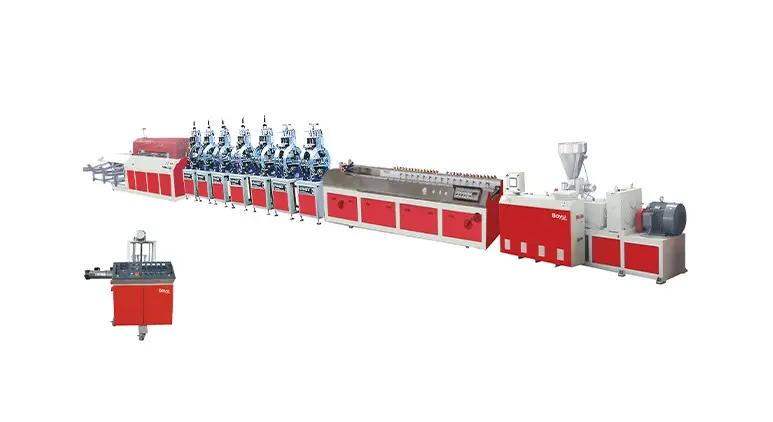
A pvc profile production line involves multiple processes, including material mixing, extrusion, shaping, cooling, calibration, and cutting. Each stage influences the total manufacturing cost and final product quality. By analyzing these factors, manufacturers can identify areas for improvement and make better decisions when planning production expansion.
For companies entering the PVC profile manufacturing industry, understanding cost structure is essential for evaluating investment returns and selecting equipment that matches their production goals.
Raw Material Costs in PVC Profile Manufacturing
Raw materials are usually one of the largest parts of PVC profile production expenses. PVC profiles are commonly manufactured using PVC resin combined with stabilizers, impact modifiers, fillers, pigments, and other additives based on different application requirements.
The cost of raw materials depends on product design, profile dimensions, formulation requirements, and market specifications. For example, profiles used in construction applications may require different performance characteristics compared with decorative profiles, which can affect material selection and formulation costs.
Production efficiency also influences material expenses. During extrusion, unstable processing conditions may increase waste caused by defective products, trimming losses, or incorrect parameter settings. Maintaining stable extrusion conditions helps manufacturers reduce scrap rates and improve material utilization.
A well-designed extrusion system supports more consistent production by controlling key factors such as temperature, pressure, and extrusion speed. When these parameters remain stable, manufacturers can achieve more uniform profiles while reducing unnecessary material consumption.
Energy Consumption and Equipment Efficiency
Energy consumption is another major factor affecting the operating cost of PVC profile manufacturing. The extrusion process requires continuous heating, melting, shaping, and cooling, which means equipment efficiency directly influences electricity usage.
The performance of the extrusion equipment matters in energy management. A modern pvc profile extrusion machine with optimized mechanical design and automated control systems can help manufacturers maintain stable production conditions and improve energy efficiency.
PLC control technology allows operators to monitor and adjust important production parameters, including temperature settings, extrusion speed, and operating status. Stable control reduces production fluctuations caused by manual adjustments and helps maintain consistent output during long working cycles.
Manufacturers should also consider the relationship between production capacity and energy consumption. Equipment operating within its suitable capacity range can often achieve better energy efficiency per unit of output. Selecting a machine configuration that matches actual production requirements can help avoid unnecessary energy costs caused by inefficient operation.
Labor, Maintenance, and Production Management Costs
Although automation has reduced the need for extensive manual operation, labor remains an important part of extrusion manufacturing costs. Skilled operators are required for equipment setup, production monitoring, quality inspection, and routine adjustments.
The complexity of operation and maintenance can influence labor expenses. Equipment with stable performance and user-friendly control systems can reduce adjustment time and improve production management efficiency. Proper operator training is also important because incorrect settings may affect product quality and increase material waste.
Maintenance costs also factor heavily into a PVC extrusion line’s total OPEX. Regular maintenance of key components, including extrusion systems, cooling units, calibration equipment, and electrical systems, helps maintain stable operation.
Unexpected downtime can create additional costs beyond repair expenses. Production delays may affect delivery schedules and reduce factory efficiency. Therefore, manufacturers should consider equipment reliability and technical support when selecting machinery for long-term operation.
How Equipment Selection Influences Long-Term Operating Costs
The choice of extrusion equipment has a direct impact on future manufacturing expenses. While initial equipment investment is an important consideration, focusing only on purchase price may overlook long-term operating factors such as energy efficiency, maintenance requirements, and production stability.
When selecting extrusion equipment, manufacturers should evaluate production capacity, automation level, equipment structure, customization options, and supplier experience. A properly configured production system can help businesses achieve a balance between output and operating costs.
Customization capability is particularly valuable because different manufacturers may produce different profile sizes, designs, and applications. A flexible equipment solution allows factories to adjust production according to market demand without making major equipment changes.
Boyu has more than 20 years of experience in plastic extrusion equipment manufacturing and provides solutions for PVC profiles, SPC flooring, and other extrusion applications. The company focuses on equipment innovation, customized solutions, and engineering support for customers with different production requirements. Its equipment features automated control systems designed to support stable operation and efficient production management.
Improving Cost Efficiency in PVC Profile Production
Managing operating costs requires continuous evaluation of materials, energy usage, equipment performance, and production processes. Manufacturers that regularly analyze these factors can identify improvement opportunities and maintain more competitive operations.
A reliable extrusion system can help reduce production risks by improving stability, minimizing waste, and supporting consistent product quality. When planning a PVC profile manufacturing project, businesses should consider both current production needs and future expansion possibilities.
Working with an experienced equipment supplier can also provide support during equipment selection, installation, and commissioning. With professional extrusion experience and customized solutions, Boyu helps manufacturers develop suitable production systems for different market requirements.
A properly designed pvc profile production line helps control operating expenses, improve manufacturing efficiency, and build a more sustainable production process in the competitive PVC profile industry.
