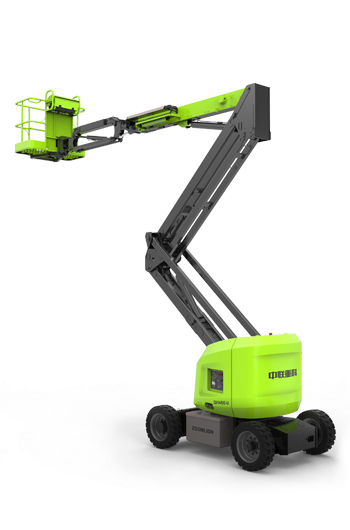
Demand for low-emission access equipment is creating opportunities for dealers serving construction, industrial maintenance, warehousing, and commercial facility management. Electric platforms are particularly relevant to indoor work and projects where noise, exhaust emissions, or limited maneuvering space influence equipment selection. For dealers reviewing their product portfolios, an articulating boom lift can address applications that require workers to reach over obstacles or access elevated work areas from positions that a straight boom cannot easily serve.
Adding electric models also gives dealers another way to respond to customers seeking alternatives to engine-powered equipment. The opportunity depends on more than product specifications, however. Buyers need suitable working height, reliable movement, practical charging arrangements, and accessible after-sales support. Zoomlion Access’s ZA14NJE-Li offers dealers a model to consider when developing an electric access equipment portfolio.
Why Dealers Should Expand Their Electric Equipment Range
Electric access equipment can help dealers serve customers working in warehouses, manufacturing facilities, shopping centers, airports, and building maintenance environments. These operations may prioritize reduced local exhaust emissions, lower operating noise, and precise movement around fixed infrastructure. Electric models can also complement diesel-powered machines, allowing a dealer to offer equipment suited to different operating conditions rather than relying on a single power category.
An articulating boom lift is especially useful where workers need to reach up and over obstacles such as machinery, shelving, pipes, or structural beams. Its jointed boom offers positioning flexibility that can be valuable during installation, inspection, and repair tasks. For dealers, this creates a distinct product category between vertical access platforms and equipment designed primarily for straight-line outreach.
The commercial opportunity depends on local demand, fleet utilization, and customer purchasing patterns. Dealers should assess which industries operate in their territories, how often customers need elevated access, and whether electric equipment can meet their typical work cycles. These factors help determine the appropriate number of units to stock and the customer segments to target.
Understanding the ZA14NJE-Li Product Position
Zoomlion Access’s ZA14NJE-Li is an electric articulating boom lift designed for applications that benefit from compact dimensions and flexible positioning. Its published specifications include a maximum working height of 16 m, a platform height of 14 m, a horizontal outreach of approximately 8.1 m, and an up-and-over height of 7.74 m. The rated platform capacity is 230 kg, so dealers should assess the combined weight of workers, tools, and materials before recommending the machine.
The model’s control and drive systems also offer useful selling points for technical discussions. Zoomlion highlights a dual control system combining valve and pump control, an AC travel drive system, and an independent auxiliary power system. The machine’s lithium-ion battery configuration is listed as 48 V/315 Ah in the operation and safety manual. Buyers should confirm charging requirements, expected duty cycles, and current warranty terms with the supplier before making operating-cost comparisons.
These details give dealers a factual basis for matching the machine to customer needs rather than relying on broad claims about performance. The ZA14NJE-Li is a candidate for suitable indoor and paved-surface applications, but actual suitability depends on floor loading, access width, working slope, and the operating environment.
Building Value Beyond the Initial Equipment Sale
Dealers can strengthen their electric equipment offering by connecting product selection with practical ownership support. Customers may need guidance on charging schedules, operator familiarization, preventive maintenance, troubleshooting, and replacement planning. Providing clear information in these areas helps buyers evaluate the equipment’s suitability for daily operations instead of focusing exclusively on purchase price.
A reliable boom lift supplier can contribute technical documentation, product training, spare-parts support, and service guidance. Dealers should verify the availability and scope of these services before committing to a product line. They should also understand warranty coverage, parts lead times, and procedures for resolving technical issues, since these factors can influence fleet uptime and customer satisfaction.
For rental businesses, financial evaluation should include expected utilization, transport costs, battery and charging considerations, maintenance expenses, and residual value. For equipment distributors, sales training and demonstration opportunities can help staff explain the differences between electric and engine-powered platforms. These activities require investment, but they can also help dealers build longer-term customer relationships.
Selecting the Right Supplier and Market Strategy
A product-line expansion works best when it aligns with identifiable customer requirements. Dealers should review local demand, competitor offerings, service capacity, and the availability of suitable charging facilities before establishing inventory targets. Demonstrations can help prospective customers assess maneuverability and reach in realistic workspaces.
When evaluating a boom lift supplier, dealers should compare technical specifications, product documentation, certification requirements for their target markets, warranty conditions, and after-sales resources. Zoomlion Access identifies the ZA14NJE-Li as CE/ANSI/CSA certified in its supplied product information; dealers should verify the applicable documentation and regulatory requirements for each market before resale.
The supplier relationship should also support future portfolio development. Access to additional machine configurations, consistent technical information, and responsive support can help dealers serve customers with different working heights and application requirements. An articulating boom lift range is most commercially useful when it complements existing products and fills a clearly defined gap in the local market.
Turning Electric Access Demand into Dealer Growth
Electric access equipment offers dealers an opportunity to address changing customer requirements while broadening their product mix. The ZA14NJE-Li provides a specific option for evaluating working height, outreach, platform capacity, and electric operation within a structured sales strategy.
By matching equipment to real applications and assessing service support alongside purchase costs, dealers can make more informed portfolio decisions. Working with a capable boom lift supplier and positioning each articulating boom lift around its appropriate applications can help build a sustainable electric access offering without relying on generalized performance claims.
