Replacing an aging dental unit is rarely a decision made because the equipment simply looks outdated. In a working clinic, older equipment becomes a problem when routine tasks start taking more effort: chair positioning is inconvenient, controls are difficult to access, cleaning requires several separate steps, or the treatment team has limited information about the equipment’s operating status.
Consider a multi-chair clinic that has reached the point where its existing treatment units no longer fit the way the team wants to work. Rather than replacing equipment purely on appearance, the clinic evaluates a modern dental unit manufacturer by asking a more practical question: what parts of the daily treatment workflow will actually improve after the upgrade?
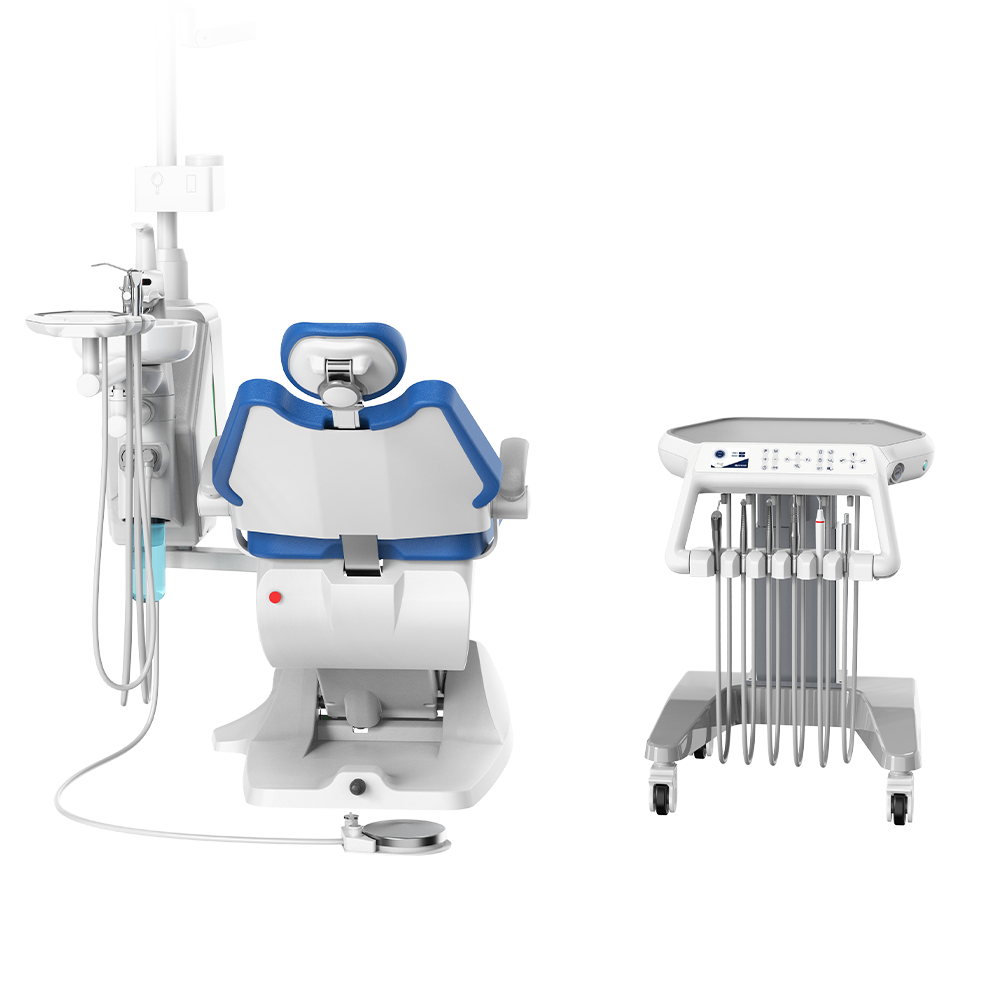
The Roson A3 provides a useful reference configuration for this type of modernization because its design combines chair positioning, digital controls, water management, lighting, cleaning functions, and customization options in one treatment system.
The Clinic Was Not Replacing a Chair Just for a New Look
The hypothetical clinic in this case has older treatment units that remain usable but increasingly feel disconnected from its current workflow. Dentists need to reposition the chair during treatment, assistants manage several separate controls, and end-of-day cleaning requires multiple manual actions.
None of these issues necessarily means the old equipment has completely failed. The problem is cumulative friction.
A clinic may tolerate an awkward control for one appointment, but the same inconvenience repeats throughout the working day. A chair position has to be adjusted again. A light needs to be changed manually. A water function requires another control. Cleaning involves another sequence.
The upgrade decision therefore starts with workflow rather than appearance. The clinic wants equipment that reduces unnecessary interaction without assuming that every available feature will automatically improve productivity.
The Upgrade Decision Started With Everyday Friction
During the evaluation, the clinic identifies several recurring requirements.
Dentists want faster access to commonly used chair positions. Assistants want controls that are easier to understand. The team also wants the treatment unit to provide clearer information when something requires attention.
The A3 addresses these requirements through a medical-grade color LCD interface. The display provides real-time operating information, includes a startup self-check, displays error codes, and stores three customizable chair positions.
That changes the role of the treatment unit. Instead of functioning mainly as a mechanical chair with attached instruments, it becomes a more information-oriented workstation.
The distinction matters when evaluating a dental unit manufacturer. A modern system should not be judged solely by the number of instruments attached to it. The purchasing team should also examine how operators interact with dental units during repetitive clinical tasks.
The New Unit Had to Solve More Than Chair Positioning
Chair movement is only one part of the upgrade. The clinic also evaluates water delivery, lighting, handpiece positioning, and cleaning.
The A3 includes a four-level adjustable handpiece holder with a 30° to 80° adjustment range, allowing the positioning of instruments to be adapted to the operator. Its handpiece placement can also be configured as over-the-patient, swing-mounted, or cart-mounted.
Water management becomes another part of the modernization. The A3 includes a water-heating system that provides warm water for handpieces and the three-way syringe, together with a dual infrared and gravity sensing system for automatic cup filling.
These features do not mean every clinic will experience the same operational improvement. Their value depends on the treatment team’s existing habits. In this case, however, the purchasing team is deliberately selecting functions that address specific points of friction identified during its assessment.
That makes the upgrade more defensible than simply choosing a newer-looking chair.
Digital Controls Changed How the Team Interacted With the Unit
One of the clearest differences appears in the way operators access information.
The A3’s LCD can display operating status and error information, while its memory function allows three chair positions to be customized. Instead of repeatedly recreating preferred positions manually, the operator can use stored settings as part of the treatment workflow.
The same thinking applies to troubleshooting. A startup self-check and error-code display do not eliminate equipment problems, but they can provide more useful information when a problem occurs. This can make the first stage of troubleshooting more structured.
For a clinic comparing a dental unit manufacturer, such details are easy to overlook because they do not appear as dramatic as the chair itself. Yet the interface is something the dentist and assistant interact with repeatedly throughout the day.
The upgrade is therefore not simply a change in hardware. It changes how the team communicates with the equipment.
The Installation Decision Extended Beyond the Treatment Chair
A modernization project also has to consider what surrounds the dental unit.
The A3 offers multiple handpiece mounting configurations, upholstery choices, unit colors, and optional integrated equipment such as a built-in scaler or electric motor. This means the clinic can evaluate configuration according to its treatment workflow rather than treating every installation as identical.
Cleaning is another practical consideration. The A3 includes a one-key smart drainage position that raises the chair and initiates a five-minute spittoon flushing cycle. For a busy clinic, a dedicated cleaning function can be considered as part of the daily operating sequence rather than as an isolated product feature.
The A3 also lists an assistant-arm anti-collision function that pauses and reverses movement when an obstacle is detected. Such features should be evaluated in the context of the actual room layout and staff workflow.
Roson presents the A3 with customization options rather than one fixed configuration, which allows the purchasing team to discuss the equipment in terms of treatment-room requirements.
What the Upgrade Tells Other Clinics
This case highlights an important point about replacing treatment equipment: modernization should begin with the problems the clinic wants to remove.
If the existing unit mainly suffers from poor positioning, chair controls deserve priority. If operators struggle with instrument access, handpiece placement becomes more important. If maintenance and cleaning consume unnecessary effort, drainage and water-management functions deserve closer attention. If the team has difficulty identifying equipment faults, diagnostic information becomes more relevant.
A modern dental unit manufacturer should therefore be evaluated through the complete working environment rather than through a feature checklist.
The A3 demonstrates this approach by combining chair memory positions, digital operating information, error-code display, adjustable instrument positioning, water management, anti-collision functionality, and one-key drainage within one configuration.
For the hypothetical clinic, the upgrade is successful not because every modern feature is automatically necessary, but because the selected features correspond to actual workflow problems. That is the more useful lesson for other practices considering replacement.
A dental unit upgrade should ultimately answer three questions: What is slowing the existing workflow? Which equipment functions directly address those problems? And can the new configuration be integrated into the treatment room without creating new complications?
Those questions provide a more practical basis for evaluating a dental unit manufacturer than appearance, feature count, or price alone. Roson’s A3 shows how a modern treatment unit can bring chair positioning, digital interaction, water functions, cleaning, safety features, and configuration choices into a more integrated operating environment.
The result of a well-planned upgrade is therefore not simply a newer dental chair. It is a treatment setup that better reflects how the clinic actually works.
