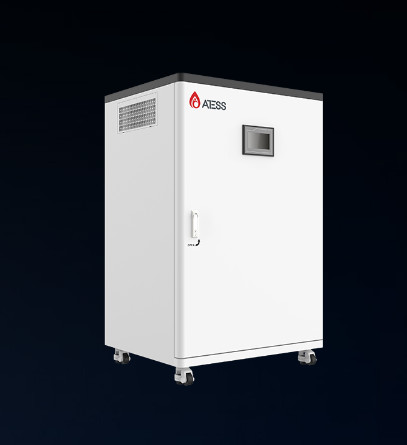
Energy storage technology has changed how facilities manage power, and the rise of lithium-ion designs brings specific advantages. A modern battery cabinet built with lithium-ion cells offers higher energy density, longer cycle life, and faster response times compared to older chemistries. Atess focuses on engineering these systems for safety and scalability. Understanding the core features helps operators decide whether a lithium ion battery storage cabinet fits their needs.
High Energy Density in a Compact Footprint
One clear benefit of lithium-ion chemistry is the amount of power stored per unit volume. A single battery cabinet using lithium cells can hold twice the usable energy of a lead-acid equivalent occupying the same floor space. This matters for urban sites or indoor installations where room is limited. The lithium ion battery storage cabinet also weighs less, simplifying transportation and floor loading. Atess has observed that warehouses, retail centers, and small factories often prefer this compact design because it leaves more room for operations. Another advantage is the ability to stack or link multiple cabinets without extensive reinforcement.
Long Cycle Life and Low Maintenance
Operators replacing older batteries frequently report reduced downtime after switching to lithium. A typical lithium ion battery storage cabinet delivers over 6,000 cycles at 80% depth of discharge, which translates to 10 to 15 years of daily use. This long lifespan lowers the total cost of ownership. The battery cabinet requires no watering, equalization charges, or forced ventilation for gas emissions. Built-in battery management systems (BMS) handle cell balancing and temperature control automatically. One logistics company using a lithium ion battery storage cabinet for their forklift charging station recorded a 40% reduction in battery-related service calls over two years.
Fast Charging and High Discharge Rates
Lithium-ion cells accept charge much faster than sealed lead-acid or gel batteries. A battery cabinet can reach 80% capacity in under an hour with the right charger. This feature benefits applications like peak shaving, where the cabinet needs to recharge quickly between grid events. Similarly, the lithium ion battery storage cabinet delivers high burst currents for motor starts or backup power transitions. Telecommunication towers often rely on this rapid response when switching from grid to batteries during an outage.
Safety and Thermal Management
Modern lithium cabinets include passive and active thermal controls. Each battery cabinet typically has cell-level fuses, flame-retardant materials, and a sealed enclosure. The lithium ion battery storage cabinet also integrates a BMS that disconnects the pack if temperatures exceed safe limits. These features reduce fire risks significantly compared to early lithium designs.
High energy density, long cycle life, fast charging, and robust safety systems define the key features. The benefits include lower long-term costs, space savings, and reliable backup power. For facilities ready to upgrade, these cabinets offer measurable improvements over conventional options.
